
An evening when clients get lost
“In one day I lost three people because I didn’t reply in time” — from a salon owner’s review of a booking service, crmindex.ru
Clients are lost in different ways: a message with no reply, a booking with no visit, a client who came once and vanished. The assistant doesn’t cut or color hair. It handles the conversation around the booking, and the warm welcome stays with your team.
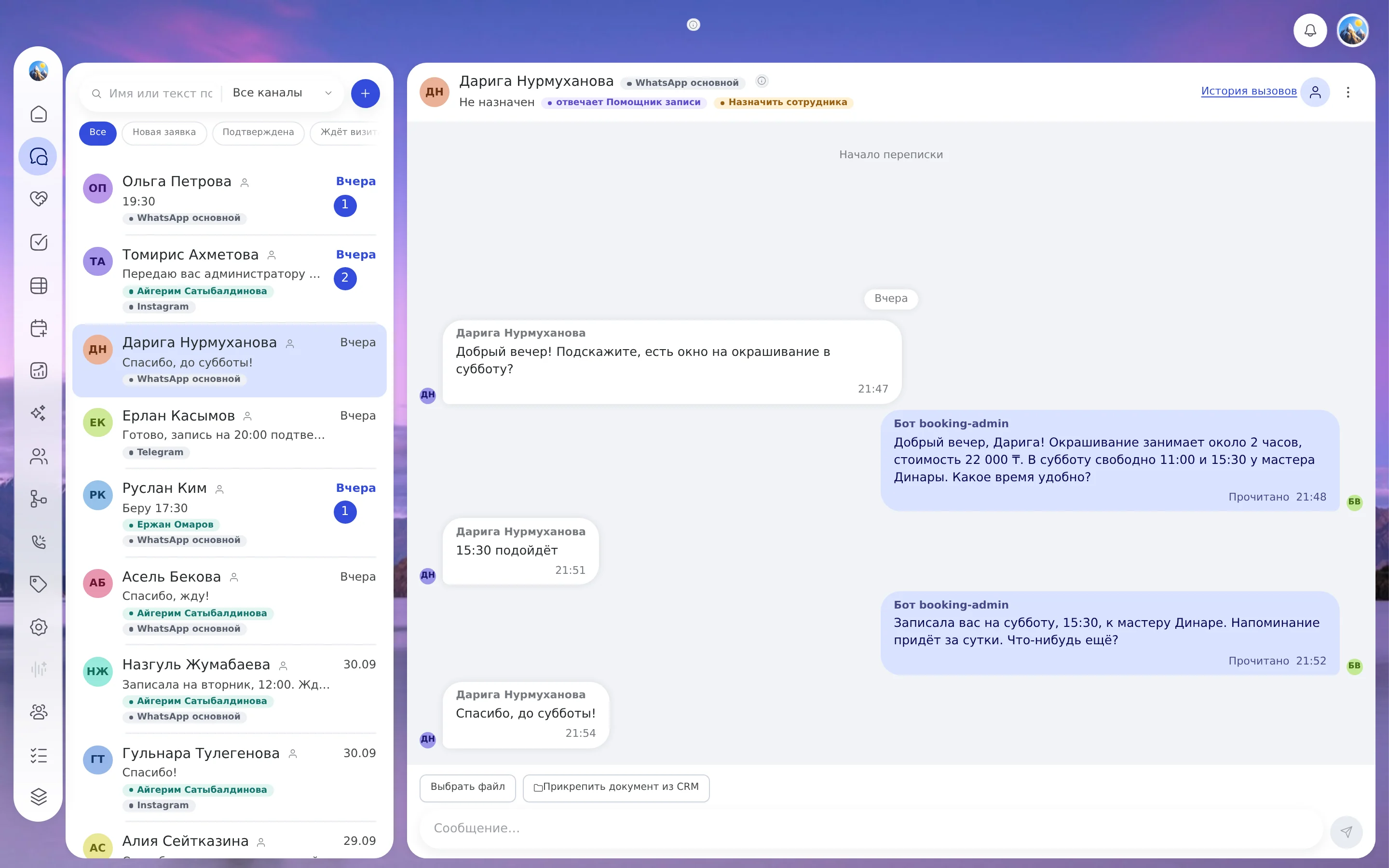
When at 10:47 PM a client writes in Instagram “any openings on Saturday?” while I'm in the chair with another client or already at home, I want to reply right away and book them without pulling me in, so that evening clients don't go to whoever answered first, and I can switch my phone off.
They message, they don’t call
Many salon and barbershop clients write first instead of calling: they look at a stylist’s work on Instagram and ask about a time in direct or WhatsApp. If the reply is late, the client may write to another stylist.
How it relates to your taskThis is about the internet in general, not beauty. One thing transfers: people are used to writing rather than calling, and the question about an opening will arrive as a message.
How it relates to your taskThis is ad reach, not the number of salon clients. One thing transfers: people look at stylists' work on Instagram and message in direct there at any time of day.
In the evening messages pile up in three messengers. You can't switch your phone off: a client might write. Someone went to another stylist, someone forgot about the visit, the slot is empty.
One chat instead of three apps. The assistant replies based on your services and openings, reminders go out by themselves, and in the morning the administrator sees the dialogs and tasks.
“A bot is cold.” It writes briefly and politely, doesn't pretend to be a person, and passes complaints, money and reschedules on the day of the visit to the administrator. Shadow mode first: replies are prepared but not sent to the client.
The habit of keeping bookings in a notebook or a basic log and replying by hand between clients. Aitomaton takes the routine conversation and booking, and the rest stays with your team.
One evening, from message to outcome
How a single inquiry is handled
- InboundThe client writes at 10:47 PM
A message from Instagram, WhatsApp or Telegram lands in one chat. The assistant replies based on the service cards and offers an opening.
- RecordEverything stays in the card
The dialog, source, owner and booking outcome (completed, canceled, no-show) are recorded automatically. In the morning the administrator opens the dialogs, not a notebook.
- Follow-upA service touch inside the booking
Confirmation right away, a reminder a day before and 2 hours before. Didn't come? An hour later, in the same conversation: “you didn't make it, shall we reschedule?”. It is all visible in the client history.
- OutcomeThe slot is filled, rescheduled or handed over
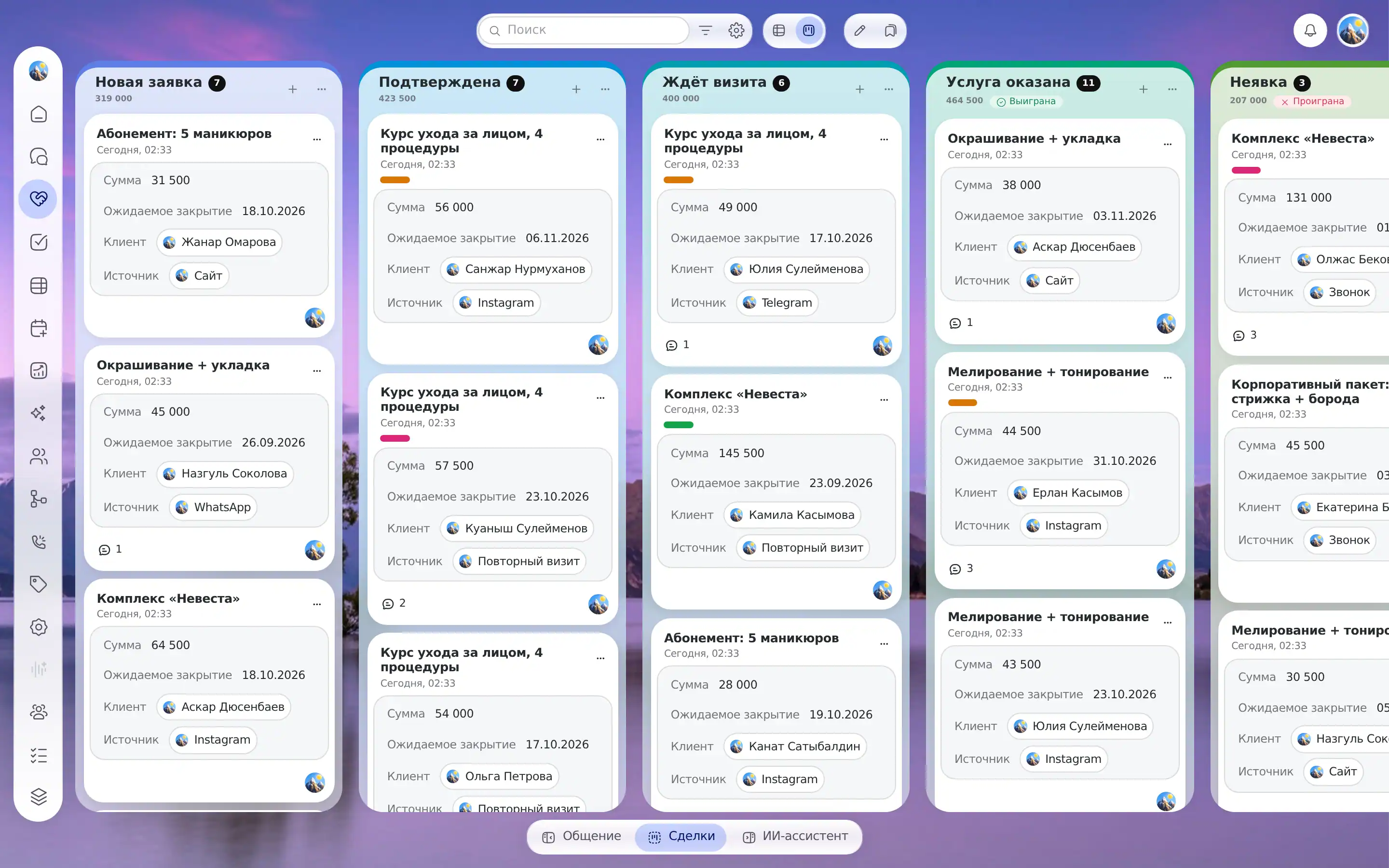
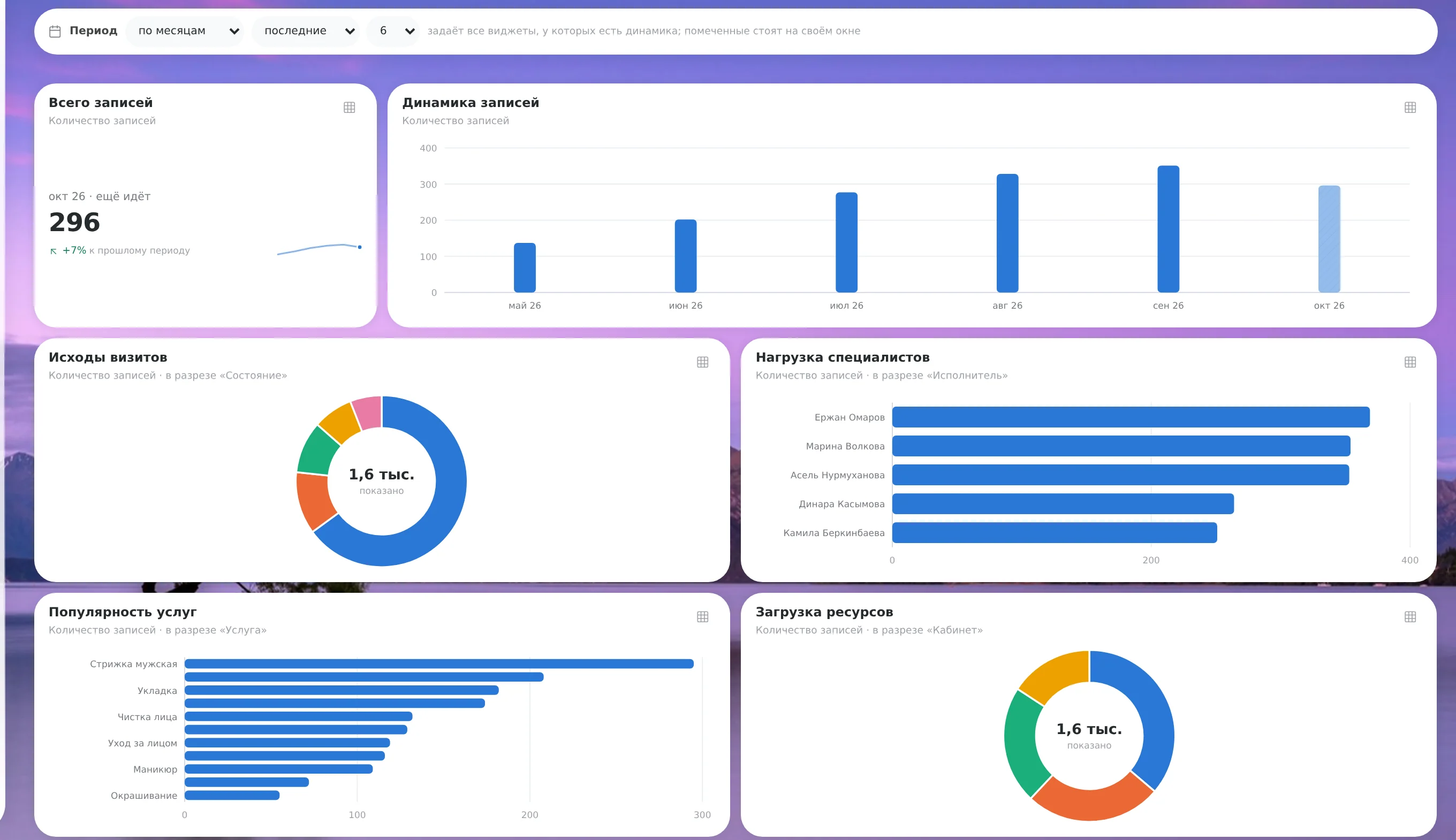
The funnel and bookings by status are on the dashboards. Complaints, money and a reschedule on the day of the visit are handled by the administrator.
Calculate your own evening
How many messages came in after 7 PM last week? How many of them were booked? Enter your own numbers.
Requests outside working hours
How we calculate: requests × share outside hours × share who leave × average ticket. Assumption: the share who leave is your own estimate, and we don't set it. This is not a forecast or a promise of results: your real numbers will come from your chats. This is arithmetic on your numbers, not a promise of results.
What an evening dialog looks like
- Customer · 22:47Do you have an opening for a manicure on Saturday?
- AI assistantYes, 11:00 AM and 2:30 PM are open. Which works better?
- Customer2:30 PM
- AI assistantBooking you for Saturday at 2:30 PM, a manicure. Is that right?
- CustomerYes
- AI assistantBooked. I'll remind you a day before and 2 hours before.
- CustomerCould I get a discount? I've been coming to you for a long time
- The question about money was passed to the administrator with a summary of the dialog
- Staff memberGood morning! This is the administrator, let's talk about the discount.
The assistant takes a price only from the service card, and without one it checks with the administrator. It doesn’t discuss discounts: that is your conversation with a regular client.
Every touch is recorded
Who talked to the client, where did they come from, how did it end? The card shows the source (one of eight: Instagram, WhatsApp, a call, the website, advertising and others), the owner, the history of the dialog and bookings, and the outcome. A specialist sees their own bookings and tasks, while amounts and client contacts are hidden. The administrator manages bookings, chats and tasks. The owner sees everything, including analytics.
The interface for a beauty salon and studio
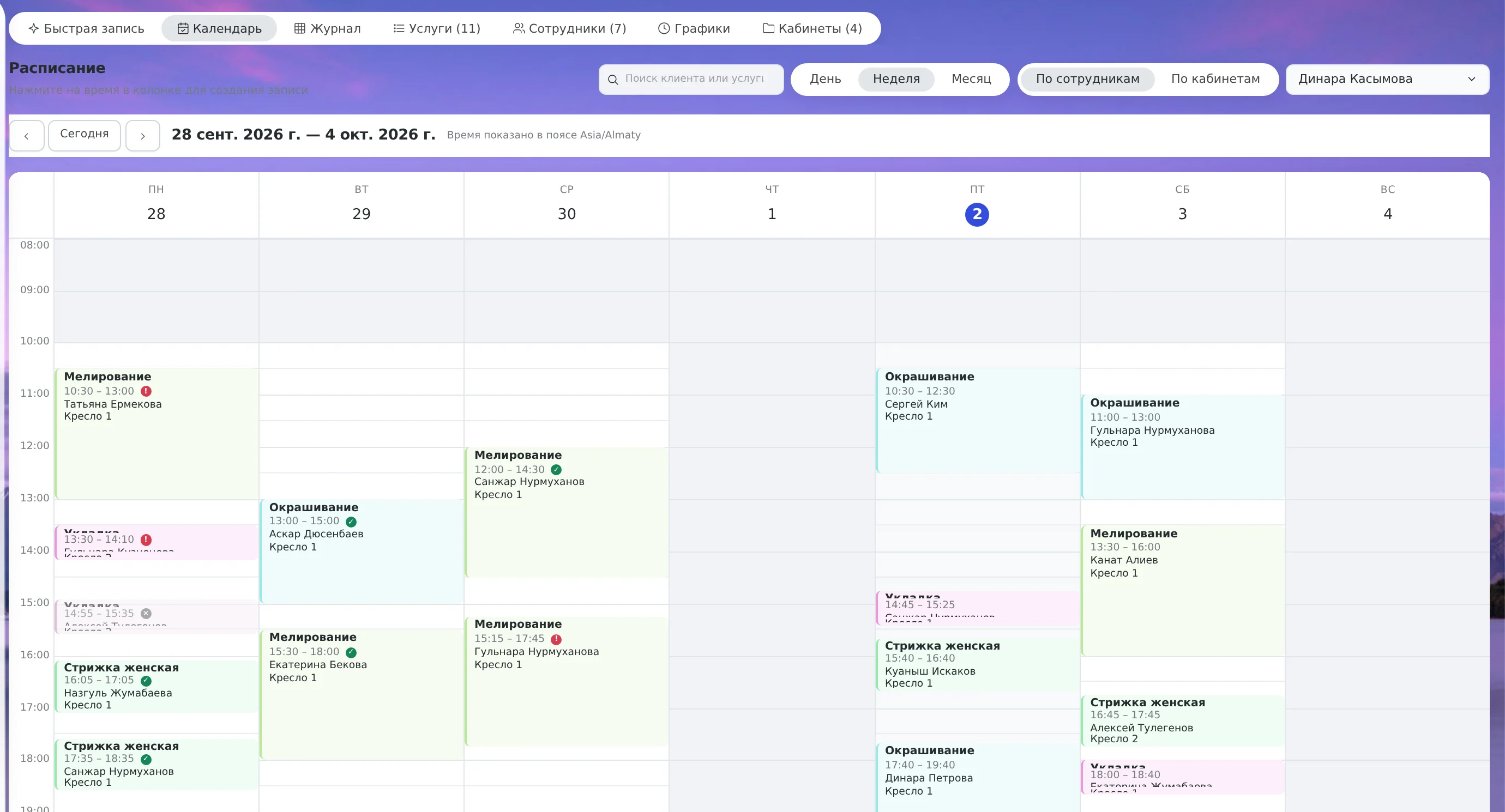
Preset screens with demo data: a visit kanban, the stylists' weekly schedule, an evening booking in a messenger and analytics.
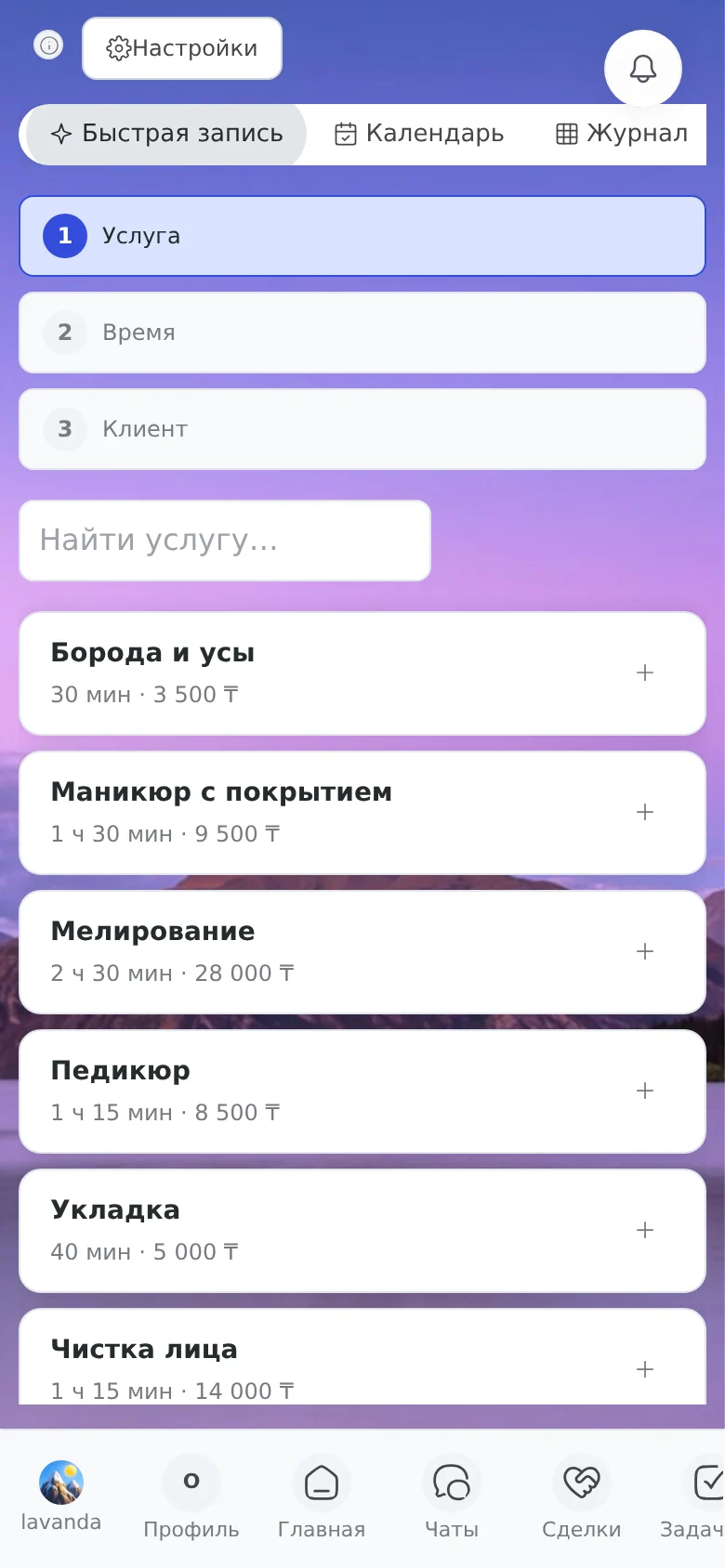
An empty slot at 3 PM: how to deal with no-shows
A client often forgets about a booking rather than refusing it. A confirmation right after booking and a gentle reminder help moderately: they do not remove no-shows entirely.
- ConfirmationTo the client in the chat right away, to the specialist in the schedule.
- Two remindersA day before and 2 hours before. No chat: a request to call goes to the specialist, and if there is none, to the administrator.
- CancellationThe client is offered another time, and the specialist sees that the slot has opened up.
- No-showThe administrator gets a task to call back, and an hour later the client gets a gentle message offering to reschedule.
- After the visitAfter 2 hours they ask how it went. Didn't book again? After a month and a half, one reminder in the same conversation.
The same message is never sent more often than once every few hours or days: pushiness hurts no less than a slow reply.
How bookings end is visible on the dashboard.
How much do your empty slots cost? Calculate that too.
The cost of no-shows
How we calculate: bookings × no-show share × (1 − share of slots refilled) × average ticket. Assumption: the values are approximate, so use your own from your booking log. The calculation shows the scale of the loss, not how much the system will recover. This is arithmetic on your numbers, not a promise of results.
Intake, records, touch: what stands behind what
What this gives your business
- What it means for youA question about an opening will arrive in a chat, including in the evening.What aitomaton does about itA shared chat; the assistant replies based on service cards while the channel is connected.ValueA question doesn't wait until morning, and you stand behind any answer that matters.
- What it means for youPeople look at the work in the same place where they ask about a time.What aitomaton does about itA booking assistant for WhatsApp and Instagram once the channel is connected.ValueA reply right in the conversation window, without waiting for the administrator.
- What it means for youA request with no answer can end in a missed visit.What aitomaton does about itThe dialog lands in the chat with its source; if the assistant is unsure, a task is created for the administrator.ValueA request doesn't get lost silently: it is either answered or waiting for a person in the tasks.
- What it means for youClient history lives in a log, in conversations and in a specialist's memory.What aitomaton does about itThe client card: source, owner, dialog and booking history, outcome.ValueNo need to piece the history together from specialists' phones.
- What it means for youMoving data from a conversation into a log by hand creates discrepancies.What aitomaton does about itBooking and confirmation in the same dialog; the “Bookings” and “Funnel” dashboards are built from them.ValueLess retyping, and the report comes from the same bookings.
- What it means for youSome of the empty slots are about forgetfulness, not disrespect.What aitomaton does about itConfirmation right away, reminders a day before and 2 hours before inside the booking.ValueA reminder no longer depends on the administrator's memory.
- What it means for youA reminder reaches the client where they already chat.What aitomaton does about itThe same reminders; on a cancellation the client is offered another time and the specialist gets a signal about the slot.ValueA freed slot is visible right away, and it can be offered to another client.
- What it means for youAfter a no-show it is worth offering the client a new time quickly.What aitomaton does about itA no-show: a task for the administrator, an hour later a message in the same conversation; after a month and a half, one reminder.ValueA no-show doesn't vanish into silence: it is visible in the client history.
Clients don’t like answering machines
True: beauty runs on a warm welcome, and a template spoils it. Salon owners say much the same: when a client writes on their own, they want a full reply, not a greeting card. So the boundaries are these.
- The assistant doesn’t pretend to be a person if a client asks directly.
- It doesn’t make up prices, timing or addresses: with no data, it passes the question to a staff member.
- It doesn’t promise discounts, refunds or compensation, and doesn’t quote a final price.
- On a complaint, a dispute about money, a reschedule on the day of the visit and in any uncertainty, it hands the dialog to a person.
- It books and reschedules but doesn’t cancel on its own. It doesn’t ask for passwords, SMS codes or card details.
After a week in shadow mode, you read in the morning how the assistant would have replied and fix a few things. Nothing goes out to clients. It goes live when you decide.
What is set up for you: the “Beauty salon and barbershop” preset
You pick the niche, and what’s left is to adjust names and prices.
Bookings and visits
New request, confirmed, awaiting visit, service provided, no-show.
A catalog without prices
Haircuts, manicure, hair coloring, facial care. Durations are set, and you set the prices.
The assistant and nine processes
Confirmation, reminders, a reschedule on cancellation, a message after a no-show, a question after the visit. All of it in the client history.
Four dashboards
Funnel, tasks, deal amounts and bookings. Until prices are entered, the amounts are zero.
How is aitomaton different from the booking log in salon software?
A booking log handles internal records: the schedule, specialists’ pay, supplies inventory and the cash desk. Aitomaton handles a different part of the work: conversations in Instagram Direct and WhatsApp, booking from a dialog and the touches around a booking. The assistant prepares replies based on your services and openings, and a person decides anything contentious.
- A CRM with an AI assistant instead of separate tools: a shared channel chat, booking from a conversation, attendance tracking and the client base in one system.
- Conversations next to your current log: if you keep inventory and payroll in another program, aitomaton handles conversations and booking separately. Two-way sync with such programs is not confirmed, and we don’t promise it.
Getting started in five steps
- Pick the niche“Beauty salon and barbershop”, a 3-day trial period.
- Adjust the dataServices, prices, specialists, schedules.
- Connect the channelsWhatsApp and Instagram. While a channel is empty, the assistant stays silent.
- Test the assistantTest messages, shadow mode, who takes the handoff.
- Open the “Bookings” dashboardAfter a week, adjust the texts and reminder times.
A WhatsApp Business API connection costs 29,990 ₸ per month, and setup by a specialist starts at 149,990 ₸ (pricing is on the website; confirm the terms when you connect).